Cars With 60:40 Split Rear Seat in India
We value 60:40 Split Rear Seat at ₹5,000 on a mid-size SUV, and ₹3,500 to ₹6,250 depending on the segment. 645 of the 1122 variants we track carry it, across 65 of 99 models — the cheapest being the Maruti Celerio VXi (Petrol manual) at ₹5,18,400.
*Ex-showroom, Delhi · Prices checked Oct 2026
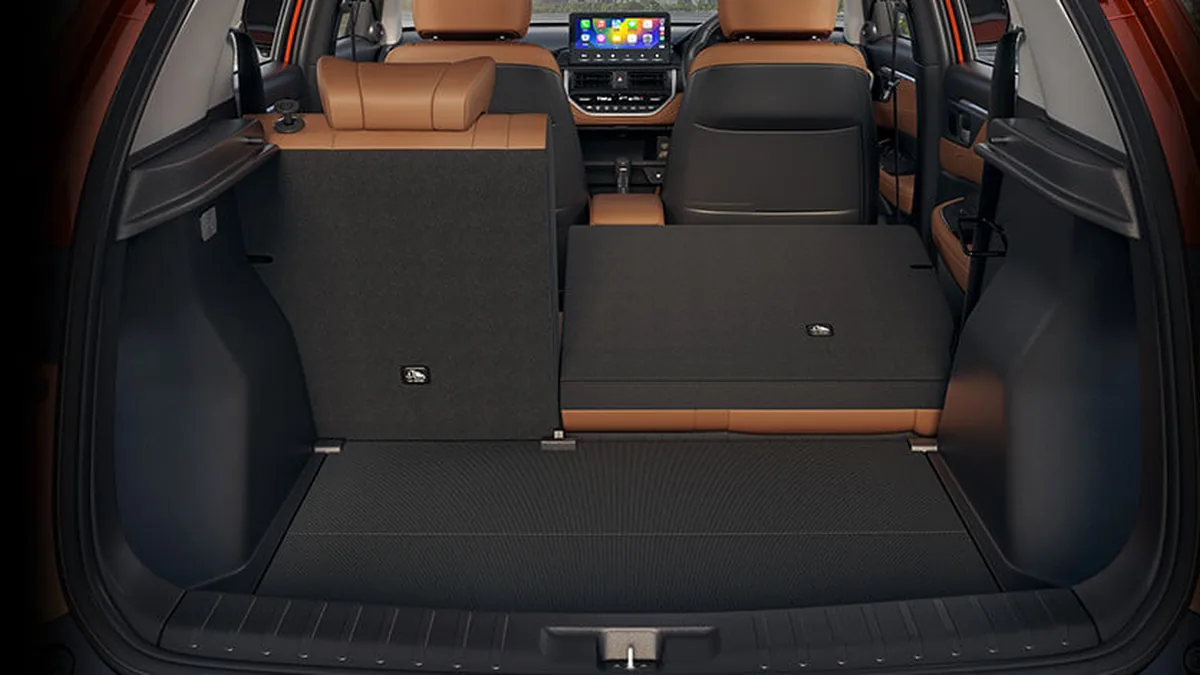
What is a 60:40 split rear seat?
A 60:40 split rear seat folds in two unequal parts, one about 60% of the width and the other about 40%. You can fold one part for a long load and still seat one or two passengers on the other.
Why it helps
With a one-piece rear seat you choose between carrying passengers and carrying a big load. With a split seat you can fit a cot, long boxes from a shop or a folded bicycle, and still have someone ride in the back.
Other splits
Some cars split the rear seat 50:50, and some three-row cars use separate captain's chairs in the second row instead of a bench. Those are useful in their own ways, but they are not a 60:40 split.
Which side folds
Which side the larger 60% part is on differs from car to car, so check which part folds and whether that suits how you load and who sits where. Some seats fold flat; others leave a step in the boot floor, which matters for long boxes.
Child seats and the split
If you use a child seat, check where the ISOFIX points sit relative to the split. A child seat on the 60% part leaves the smaller section free to fold for a pram or shopping.
How common it is, by fuel
Share of the variants we track that carry 60:40 Split Rear Seat.
- Electric 71% (74 of 103)
- Strong hybrid 69% (16 of 23)
- Diesel 65% (147 of 225)
- Petrol 57% (376 of 659)
- CNG 28% (32 of 112)
Where it depends on the version, not just the trim
On these cars, a trim carries it with one gearbox, fuel or battery and not another.
How we decide a variant has it
We credit it only where the manufacturer lists a 60:40 split for the rear seat on that variant. A 50:50 split, a one-piece folding seat or captain's chairs do not earn it.
What to check at the showroom
- Fold each part of the seat and see how flat the load floor ends up.
- Check which side the larger part is on, and that the seat belts stay usable with one part folded.
- Ask whether the backrest reclines as well as folds.
Written by Rupesh Kumar · explanation reviewed
Standard, extra, or left out
42 cars have a 60:40 split rear seat on every version. On 23 cars it comes only on some versions, so you pay to climb to it. 34 cars do not offer it on any version.
The valuation
₹5,000Rear bench folds in two sections for mixed load and passengers.
Why this number: A different rear seat frame.
A reference point exists, but not for the identical item. This is what the feature is worth to a buyer who wants it — not what it costs a manufacturer to fit, which nobody outside the factory knows and which would not help you anyway. How we arrive at every figure.
What it is worth on each kind of car
The same feature is worth less on a cheaper car: the buyer is more price-sensitive and it is a larger share of what they are paying.
81 variant upgrades on this site add it
Every one of them bundles it with other equipment, so none of these price differences is the price of this feature on its own. The upgrades that change the least besides it are listed first — they are the ones that tell you most.
| The upgrade | It costs | We value this at | Also changes | Verdict |
|---|---|---|---|---|
| Syros EV HTK+ → HTX Kia · Electric 42 kWh | ₹1,00,000 | ₹4,600 | 3 other items | Fair upgrade |
| Celerio LXi → VXi Maruti Suzuki · Petrol manual | ₹48,500 | ₹3,500 | 4 other items | Pricey |
| Syros HTK(EX) → HTK+ Kia · Petrol manual | ₹94,000 | ₹4,600 | 4 other items | Pricey |
| Syros HTK(EX) → HTK+ Kia · Diesel manual | ₹94,000 | ₹4,600 | 4 other items | Pricey |
| Syros EV HTK+ → HTX Kia · Electric 51.4 kWh | ₹1,00,000 | ₹4,600 | 4 other items | Fair upgrade |
| Seltos HTE → HTE(O) Kia · Diesel manual | ₹1,10,000 | ₹5,000 | 4 other items | Pricey |
| Seltos HTE → HTE(O) Kia · Petrol manual | ₹1,17,000 | ₹5,000 | 4 other items | Pricey |
| Wagon R LXi → VXi Maruti Suzuki · Petrol manual | ₹55,500 | ₹3,500 | 6 other items | Pricey |
| Wagon R LXi → VXi Maruti Suzuki · CNG manual | ₹55,500 | ₹3,500 | 6 other items | Pricey |
| Tekton Visia+ → Acenta Nissan · Petrol manual | ₹65,000 | ₹5,000 | 6 other items | Fair upgrade |
| Taigun Comfortline → Highline Volkswagen · Petrol manual | ₹2,00,000 | ₹5,000 | 6 other items | Pricey |
| Sierra EV Adventure → Empowered Tata Motors · Electric 75 kWh | ₹1,60,000 | ₹5,000 | 7 other items | Pricey |
Showing the 12 with the fewest other changes, of 81. Every upgrade is listed on its car's own page, linked in the table below.
The cheapest variant of each car that has it
The last column is what that variant costs over the car's own entry price. It is not the price of this feature — climbing to that trim buys everything else on the way up too. It is the honest answer to “what do I have to spend on this car to get one?”
| Car | Cheapest variant with it | Ex-showroom | Over the base trim | Variants |
|---|---|---|---|---|
| Maruti Celerio | VXi Petrol manual | ₹5,18,400 | +₹48,500 | 7 of 8 |
| Maruti Wagon R | VXi Petrol manual | ₹5,54,400 | +₹55,500 | 7 of 9 |
| Nissan Magnite | Visia Petrol manual | ₹5,69,400 | standard fit | 18 of 18 |
| Nissan Gravite | Visia Petrol manual | ₹5,73,400 | standard fit | 6 of 6 |
| Renault Kiger | Authentic Petrol manual | ₹5,81,000 | standard fit | 13 of 13 |
| Maruti Baleno | Sigma Petrol manual | ₹5,98,900 | standard fit | 13 of 13 |
| Maruti Fronx | Sigma Petrol manual | ₹6,89,900 | standard fit | 12 of 12 |
| Toyota Glanza | E Petrol manual | ₹6,99,000 | standard fit | 13 of 13 |
| Toyota Urban Cruiser Taisor | E Petrol manual | ₹7,43,000 | standard fit | 10 of 10 |
| Maruti Swift | ZXi Petrol manual | ₹7,61,900 | +₹1,78,000 | 6 of 15 |
| Mahindra XUV 3XO | MX1 Petrol manual | ₹7,79,000 | standard fit | 31 of 31 |
| Maruti Ertiga | LXi Petrol manual | ₹8,90,000 | standard fit | 9 of 9 |
| Kia Sonet | HTK+ Petrol manual | ₹9,27,900 | +₹1,83,000 | 13 of 22 |
| Toyota Rumion | E Petrol manual | ₹9,79,000 | standard fit | 8 of 8 |
| MG Astor | Sprint Petrol manual | ₹9,79,100 | standard fit | 7 of 7 |
| Maruti Brezza | ZXi Petrol manual | ₹9,94,900 | +₹2,45,000 | 6 of 13 |
| Renault Duster | Authentic Petrol manual | ₹10,49,000 | standard fit | 14 of 14 |
| Maruti Victoris | LXi Petrol manual | ₹10,49,900 | standard fit | 21 of 21 |
| Kia Syros | HTK+ Petrol manual | ₹10,75,900 | +₹2,34,000 | 12 of 17 |
| Maruti Grand Vitara | Sigma Petrol manual | ₹10,76,500 | standard fit | 18 of 18 |
| Skoda Kylaq | Signature+ Petrol manual | ₹10,79,000 | +₹3,20,000 | 6 of 11 |
| Hyundai Creta | E Petrol manual | ₹10,90,700 | standard fit | 21 of 21 |
| Toyota Urban Cruiser Hyryder | E Petrol manual | ₹11,31,000 | standard fit | 12 of 12 |
| Kia Carens Clavis | HTE Petrol manual | ₹11,38,900 | standard fit | 22 of 22 |
| Tata Nexon | Creative+ PS Petrol manual | ₹11,46,990 | +₹4,07,000 | 10 of 44 |
| Nissan Tekton | Acenta Petrol manual | ₹11,79,000 | +₹1,30,000 | 10 of 12 |
| Honda Elevate | SV Petrol manual | ₹11,80,000 | standard fit | 9 of 9 |
| Hyundai Venue | HX8 Petrol manual | ₹11,94,400 | +₹3,94,500 | 7 of 18 |
| Citroën Aircross X | Plus Petrol manual | ₹11,99,000 | +₹3,10,000 | 1 of 6 |
| MG Hector | Style Petrol manual | ₹12,14,000 | standard fit | 7 of 7 |
| Kia Seltos | HTE(O) Petrol manual | ₹12,41,900 | +₹1,17,000 | 31 of 33 |
| Mahindra Thar Roxx | MX1 Petrol manual | ₹12,52,000 | standard fit | 21 of 21 |
| Tata Curvv | Creative X+ Petrol manual | ₹12,90,990 | +₹2,91,000 | 8 of 15 |
| Volkswagen Taigun | Highline Petrol manual | ₹12,99,900 | +₹2,00,000 | 10 of 11 |
| Tata Harrier | Smart Petrol manual | ₹12,99,990 | standard fit | 26 of 26 |
| Tata Safari | Smart Petrol manual | ₹13,39,990 | standard fit | 22 of 22 |
| Volkswagen Virtus | Highline Petrol manual | ₹13,50,900 | +₹2,80,000 | 10 of 11 |
| Mahindra XUV 3XO EV | AX5 Electric 39.4 kWh | ₹13,88,999 | standard fit | 2 of 2 |
| Skoda Slavia | Signature Petrol manual | ₹13,94,000 | +₹3,94,100 | 9 of 12 |
| Mahindra XUV 7XO | AX Petrol manual | ₹13,99,000 | standard fit | 20 of 20 |
| Hyundai Alcazar | Executive Petrol manual | ₹14,50,700 | standard fit | 10 of 10 |
| Skoda Kushaq | Signature Petrol manual | ₹14,69,000 | +₹4,00,000 | 10 of 12 |
| MG Windsor EV | Excite Electric 38 kWh | ₹14,84,800 | standard fit | 5 of 5 |
| Hyundai Bayon | HX8 Petrol manual | ₹15,09,900 | +₹5,10,000 | 4 of 11 |
| Kia Syros EV | HTX Electric 42 kWh | ₹15,99,900 | +₹2,50,000 | 4 of 7 |
| Maruti e Vitara | Delta Electric 49 kWh | ₹16,19,000 | standard fit | 3 of 3 |
| Tata Nexon EV | Empowered Electric 45 kWh | ₹16,34,000 | +₹3,85,000 | 2 of 6 |
| Tata Sierra | Adventure+ L Petrol manual | ₹16,99,000 | +₹5,50,000 | 12 of 36 |
| MG ZS EV | Executive Electric 50.3 kWh | ₹17,99,000 | standard fit | 4 of 4 |
| MG Hector Plus | Sharp Pro Petrol manual | ₹17,99,800 | standard fit | 2 of 2 |
| Hyundai Creta Electric | Executive Electric 42 kWh | ₹18,02,800 | standard fit | 8 of 8 |
| Kia Carens Clavis EV | HTK+ Electric 42 kWh | ₹18,03,900 | standard fit | 8 of 8 |
| Jeep Compass | Sport Diesel manual | ₹18,29,000 | standard fit | 9 of 9 |
| Tata Curvv EV | Empowered X Electric 55 kWh | ₹19,39,000 | +₹2,20,000 | 1 of 2 |
| Mahindra BE 6 | One Electric 59 kWh | ₹19,45,000 | standard fit | 7 of 7 |
| MG Hector Tomahawk EV | Excite 7S Electric 69.2 kWh | ₹19,49,800 | standard fit | 3 of 3 |
| Mahindra XEV 9S | One Above Electric 59 kWh | ₹20,65,000 | standard fit | 6 of 6 |
| Tata Harrier EV | Adventure Electric 65 kWh | ₹21,79,000 | standard fit | 7 of 7 |
| Mahindra XEV 9e | Pack One Electric 59 kWh | ₹21,90,000 | standard fit | 5 of 5 |
| Tata Sierra EV | Empowered Electric 63 kWh | ₹22,79,000 | +₹4,00,000 | 4 of 8 |
| Jeep Meridian | Longitude Diesel manual | ₹23,33,000 | standard fit | 9 of 9 |
| BYD Atto 3 | Dynamic Electric 49.92 kWh | ₹24,99,000 | standard fit | 3 of 3 |
| BYD eMax 7 | Comfort Electric 71.8 kWh | ₹28,30,000 | standard fit | 2 of 2 |
| Toyota Fortuner | 4x2 Petrol automatic | ₹35,11,000 | standard fit | 7 of 7 |
| MG Majestor | Savvy 4x2 Diesel automatic | ₹43,49,000 | standard fit | 2 of 2 |
Ex-showroom, Delhi. How we read each car's prices and equipment, and how often we re-check them: where the numbers come from.
Common questions
- What is a 60:40 split rear seat?
- A 60:40 split rear seat folds in two unequal parts, one about 60% of the width and the other about 40%. You can fold one part for a long load and still seat one or two passengers on the other.
- What does a 60:40 split rear seat mean?
- The rear backrest folds in two parts, one about 60% of the width and one about 40%, so you can fold one part for luggage and keep the other for passengers.
- Is a 60:40 split better than 50:50?
- A 60:40 split lets two people sit on the larger part while the smaller one folds, or one person sit while a longer load goes through. A 50:50 split leaves one seat on each side. Both are more useful than a one-piece seat.
- Does the rear seat fold flat?
- Not always. Some leave a slope or a step in the boot floor. Fold it down in the showroom and look.
- Do seven-seaters have a 60:40 split?
- Many have a 60:40 split middle row, and some split the third row 50:50. Cars with captain's chairs in the middle row do not have a split bench there.
- What is a 60:40 split rear seat worth in a car?
- CarMaths values it at ₹5,000 on a mid-size SUV, scaling to ₹3,500 on the cheapest segment and ₹6,250 on the most expensive. A different rear seat frame.
- Can a 60:40 split rear seat be added after you buy the car?
- No. It has to come from the factory, so the trim that has it is the only way to get it. That is why the figure is what the feature is worth to you rather than what it costs to fit.
- Which is the cheapest car with a 60:40 split rear seat?
- Of the 99 cars CarMaths tracks, the cheapest variant carrying it is the Maruti Celerio VXi (Petrol manual) at ₹5,18,400 ex-showroom, which is ₹48,500 above that car's entry price.
- What does a variant upgrade that adds a 60:40 split rear seat cost?
- The typical step that adds it costs ₹1,53,000, across 81 such upgrades — but every one of those upgrades adds other equipment too, so that figure is the price of the whole gap, not of this feature.